


Spending time outdoors can influence how a person feels, but researchers at Texas A&M University wanted to understand why.
Josh Hicks, a professor in the Department of Psychological and Brain Sciences, and graduate student Lydia Needy surveyed more than 1,800 people across five surveys to try to learn what makes life feel meaningful and which aspects are most closely connected to nature.
“We wanted to look at how nature makes life feel meaningful, with a main goal of understanding what aspect of meaning is most relevant to experiences in nature,” Hicks said.
The findings were published in Environment and Behavior.
Because meaning in life can be difficult to define, the researchers considered three components: whether life makes sense, whether one has purpose and whether people feel that they matter.
People are also reading…
“We would argue there is a fourth one, as well, called the experiential appreciation of appreciating what’s around them,” Hicks said.
Experiential appreciation — recognizing and valuing one’s experiences and surroundings — emerged as the factor most strongly associated with nature across three surveys and a field study comparing participants in different locations.
The researchers also found that people who reported a stronger sense of meaning expressed greater intentions to act in environmentally friendly ways. The finding suggests that people who find meaning in the world around them may also be more inclined to protect it.
The results indicate that nature’s benefits may come less from simply being outdoors and more from slowing down to notice and appreciate one’s surroundings. A video experiment also increased participants’ feelings of meaning, suggesting that even indirect exposure to nature may have benefits.
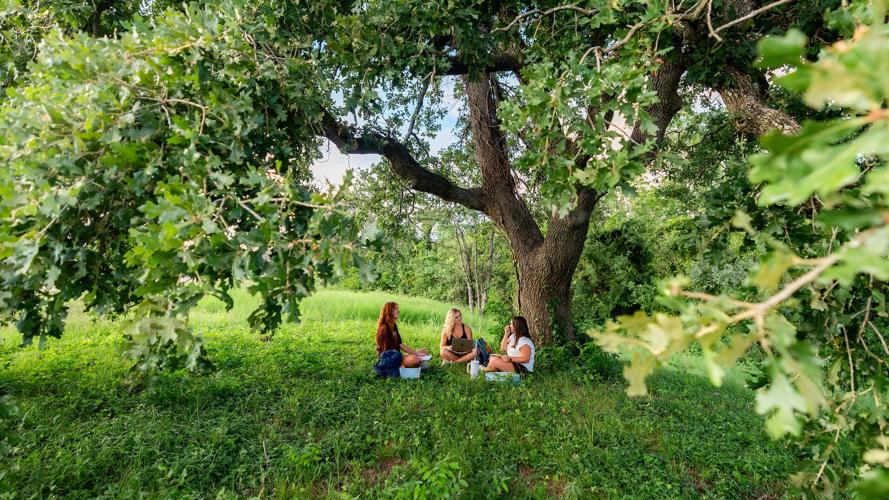
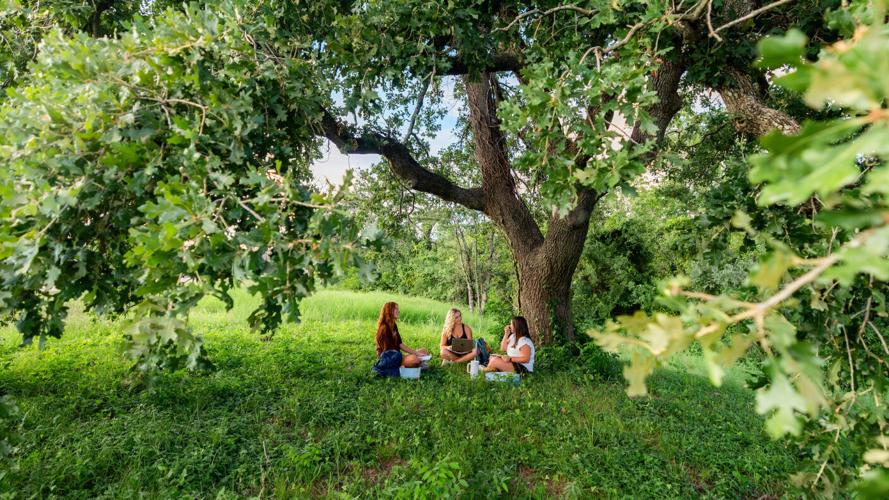
The research points to small, accessible habits rather than major lifestyle changes. Pausing to notice the shade of a tree, the sound of birds or sunlight falling across a sidewalk may help direct attention toward the present moment.
Because experiential appreciation had the strongest relationship with meaning, the benefits may depend less on how much time someone spends outside and more on how that time is spent.
Hicks said future research could explore how long these effects last, whether different environments — such as gardens and forests — produce different outcomes and whether people can be encouraged to make appreciation part of their daily routines.
For now, the findings offer a reminder that nature can be more than a destination. It can also be a readily available source of meaning.


