


Whether watching them swim alongside boats, listening to their unique vocalizations or seeing them leap out of the water, bottlenose dolphins have long held the public’s fascination. From fictional Flipper to inspirational real-life Winter, there is just something about dolphins that causes people to ponder just what they are up to behind that mischievous grin.
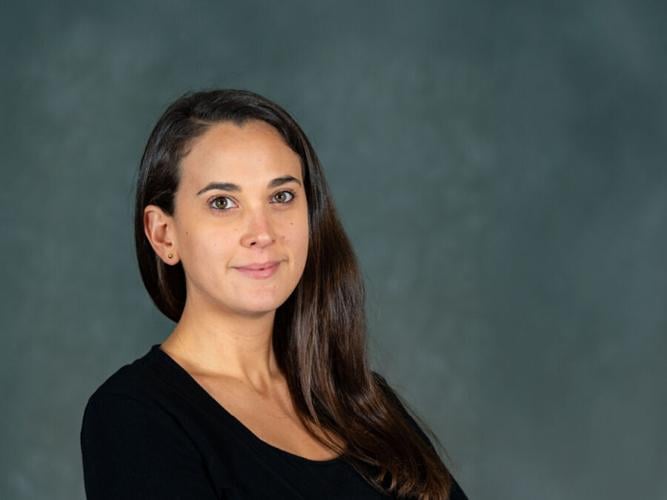
Wondering why bottlenose dolphins do what they do while searching for answers is at the heart of the work of researchers at the Foroughirad Lab at Texas A&M University at Galveston. Led by Dr. Vivienne Foroughirad, assistant professor in the College of Marine Sciences and Maritime Studies, the Foroughirad Lab studies the behavioral ecology of cetaceans, focusing on how social environments impact survival and reproduction across the lifespan.
People are also reading…
This summer, Foroughirad and Nikki Shintaku, a Ph.D. student in the Foroughirad Lab, will be heading to Shark Bay, Western Australia, to embark on a four-month field season studying Indo-Pacific bottlenose dolphins (Tursiops aduncus) for the Shark Bay Dolphin Research Project (SBDRP). SBDRP is a collaborative project between Texas A&M University at Galveston, Georgetown University and the University of Queensland and has been collecting behavioral, life-history, ecological and genetic data on Indo-Pacific bottlenose dolphins since the mid-1980s. Located 850 kilometers north of Perth, Shark Bay is a United Nations Educational, Scientific and Cultural Organization (UNESCO) World Heritage Area home to sharks, rays, dugongs, sea turtles and, of course, bottlenose dolphins.
“The bottlenose dolphin population in Shark Bay is large, residential, well-marked and consistently monitored, providing a unique opportunity to study fine-scale social structure and population dynamics,” said Foroughirad. “The elaborate social system in Shark Bay includes segregated adult male and female associations, multilevel male alliances, a contiguous fission-fusion network and evidence of social learning of cultural traditions.”
A typical day in the field begins at sunrise, heading out on the water to search for dolphins. When a group is located, the behavior, the presence of new calves and details about their local environment are recorded. Specific individuals are tracked throughout the day to observe their foraging behavior, social interactions and movement patterns.
“During these observations, dorsal fin photographs are taken for photo identification, which allows for tracking of any new notches or scars that help us recognize individuals over time,” Foroughirad said.
The field team will be on the water every day that the weather permits, and occasional land days are spent processing photographs and entering data to maintain the long-term database that makes the SBDRP so valuable.
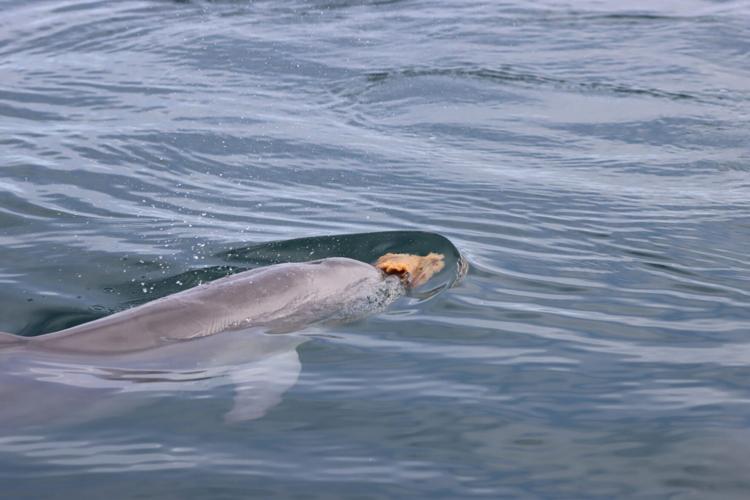
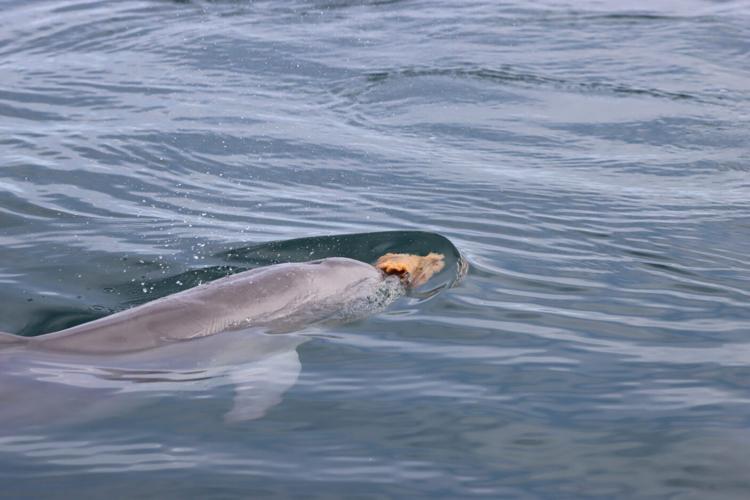
“This season will advance two exciting research projects,” Foroughirad said. “One project uses an underwater remotely operated vehicle (ROV) to map sponge density throughout the bay. This is important because a small group of dolphins practice a unique behavior of using basket-shaped marine sponges as tools to protect their rostrum while they hunt fish along the seafloor. This behavior, known as ‘sponging,’ has only been observed in Shark Bay. Exploring the distribution and availability of sponges will help us understand how this cultural transmission of tool use is maintained.”
Foroughirad is not alone in looking forward to the data sets that can be captured related to dolphins and sponges.
“I’m excited to use the ROV to dig deeper into how the availability of sponges shapes this rare cultural transmission of tool use,” Shintaku said. “It’s really fascinating to observe how individual life histories shape the genetic diversity of the population. Hopefully, after this field season, we will have a clearer sense of how it all fits together.”
Shintaku’s dissertation research focuses on population genetics. As part of the research, she will collect and use genetic samples to investigate how sampling methods affect estimates of effective population size (a measure of the number of individuals in a population that are actively reproducing and contributing offspring to the next generation).
“This research serves as a key indicator of a population’s long-term genetic diversity,” Foroughirad said. “The insights gained from Shark Bay can be applied to help estimate the size of other dolphin populations that are less accessible or understudied.”
Long-term datasets, like SBDRP, allow researchers to track individuals, relationships and population changes over time. This field season will continue to advance the scientific knowledge that helps scientists understand dolphin populations, social structure and evolution.
The mystery of why dolphins do what they do may never be fully solved. However, thanks to the work of the Foroughirad Lab, some of the answers to those questions will come into focus, even if researchers must travel all the way down under to find them.


