



A future teacher might remember how to divide fractions. But can they explain why the method works? Show what it means visually? Help a student who approaches the problem a different way?
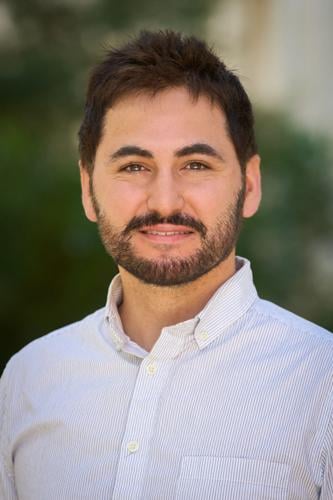
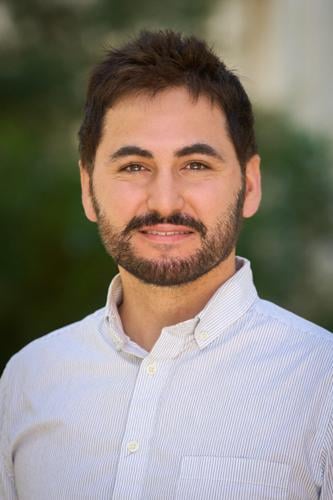
In a decade of teaching mathematics methods courses, Dr. Ali Bicer, an associate professor in Texas A&M University’s Department of Teaching, Learning and Culture, has seen many pre-service teachers who can perform a calculation but struggle to explain the concepts behind it. It is a longstanding challenge in math teacher preparation, he said.
Now, backed by a $2 million grant from the National Science Foundation, Bicer and his colleagues are testing whether artificial intelligence can help. The five-year project will develop an AI-guided professional learning system aimed at strengthening pre-service teachers’ mathematical knowledge, teaching skills and creative thinking across eight geographically diverse universities serving rural and urban communities. More than 900 pre-service teachers are expected to participate.
People are also reading…
The researchers see AI’s ability to provide personalized, real-time guidance as a way to supplement traditional teacher preparation.
“We’re not really interested in using AI to replace teachers’ thinking,” he said. “We’re interested in using AI to provoke and deepen teachers’ thinking.”
Beyond the right answer
The project comes amid a persistent shortage of well-prepared math teachers in the United States, particularly in rural and high-need communities. Bicer said the project will not solve the entire shortage, but could help strengthen the pipeline by making high-quality teacher preparation more accessible and scalable.
One focus is mathematical creativity, which Bicer describes as the ability to approach math flexibly — by generating different solutions, using different representations, making connections between ideas, recognizing patterns and posing or modifying problems.
“If a teacher knows only one way to solve a problem, it becomes difficult to understand a student who approaches that problem differently,” Bicer said. “A mathematically creative teacher is more prepared to say, ‘That is interesting. Show me how you’re thinking,’ rather than simply saying, ‘That is not the method I taught.’”
AI as a cognitive partner
The researchers plan to develop 30 AI-guided modules focused on topics such as fractions and proportional reasoning.
Bicer said the system is designed to act as a “cognitive partner,” using adaptive questions and feedback rather than simply telling a future teacher whether an answer is correct.
For example, a module might ask, “If Jessica drives 90 miles in two hours, what is her rate, and how do you know?” After the teacher answers 45 miles per hour, the AI could ask them to show the relationship using a bar model or a double number line, explain how those representations are connected, or consider what a middle school student might misunderstand about the problem.
From there, the AI might ask the teacher to create a new problem, make it more challenging or analyze a hypothetical student’s incorrect solution.
Because the system adapts to individual responses, pre-service teachers completing the same module could receive different guidance. Bicer said that can allow teacher preparation programs to provide more individualized attention than an instructor can provide to every student.
“That is where I see the real promise: not replacing university instructors, but extending their capacity to provide personalized learning opportunities,” he said.
Taking the lessons into the classroom
The project begins Oct. 1 and runs through September 2031. Bicer is leading the research with co-principal investigators Dr. Donggil Song, an associate professor in the Department of Engineering Technology and Industrial Distribution, and Dr. Tugce Aldemir, an assistant professor in the Department of Teaching, Learning and Culture.
Researchers will assess participants’ mathematical content knowledge, pedagogical content knowledge and mathematical creativity before and after the program. Bicer said the team also wants to know whether those changes carry over into their teaching.
A sample of participants will be observed during their practicum. Researchers will look at practices such as encouraging multiple solutions, using different representations, asking open-ended questions, making mathematical connections and responding to students’ ideas. They will also examine lesson plans, conduct interviews and analyze participants’ interactions with the AI.
“That lets us ask a much more meaningful question,” Bicer said. “Did they learn something in the modules, and did that learning actually show up when they stood in front of students?”


