


High-speed movies of microscopic worms may sound like a dull night at the cinema, but this advanced imaging capability could help scientists better understand how diseases begin and progress, track subtle changes in cells and study how the body responds to treatments.
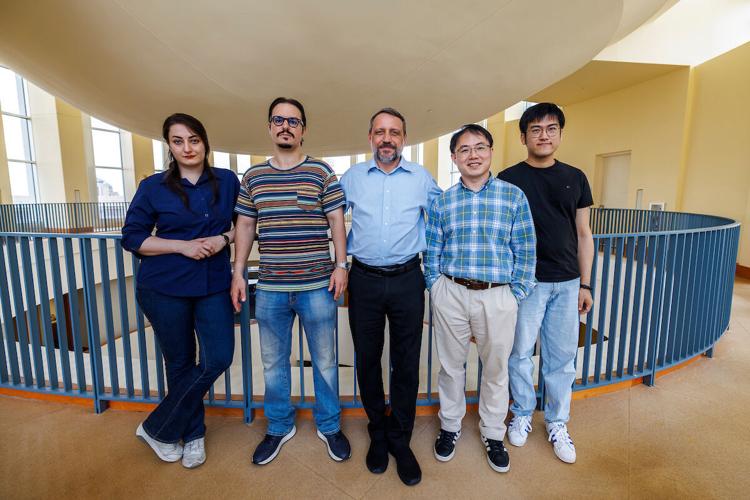
Researchers at Texas A&M University have advanced imaging technology that records biology in real time, producing high-speed videos that capture both motion and chemistry at once. They published their findings in PNAS (Proceedings of the National Academy of Sciences).
Capturing life at 1,000 frames per second
The team records microscopic chemical signatures of biological activity at up to 1,000 frames per second.
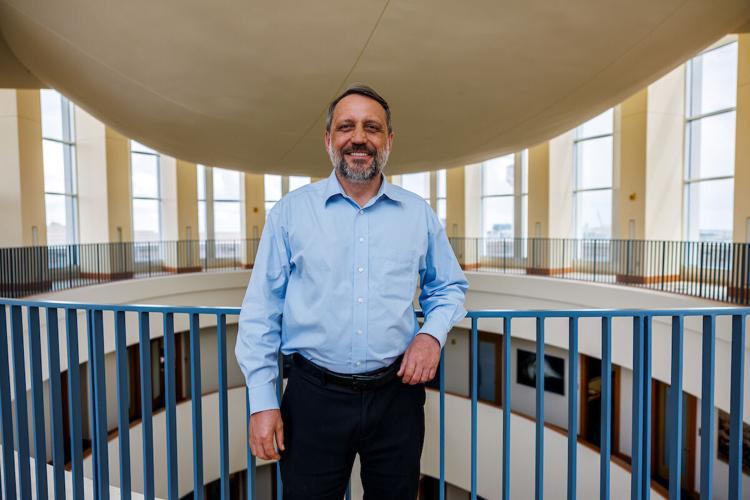
“We’re able to follow processes that were essentially invisible before,” says physicist and co-author Dr. Alexei Sokolov, University Distinguished Professor in the College of Arts and Sciences and associate director of the Institute for Quantum Science and Engineering. “Not just where things are, but how they’re evolving, how the underlying chemistry is changing from moment to moment.”
People are also reading…
Capturing both motion and chemistry at once, without the blur of traditional methods, may open new possibilities in fields like medical imaging.
Observing chemistry, not just structure
Most biological imaging tools show structure: the shape of a cell, the outline of tissue, the movement of an organism. But disease is driven by chemistry — how molecules interact, shift and respond over time. Sokolov and team developed a technique that maps those chemical changes directly, using the natural vibrations of molecules rather than dyes or labels.
“We’re not adding anything to the system,” said Dr. Jizhou Wang, senior researcher and lead author on the paper. “We’re reading the chemistry that’s already there.”
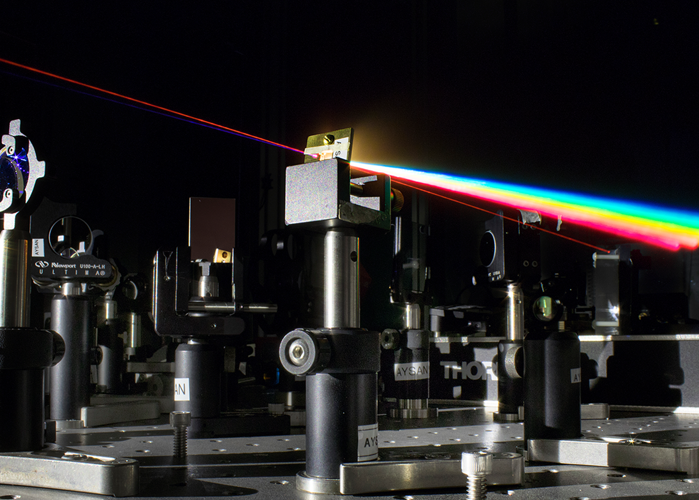
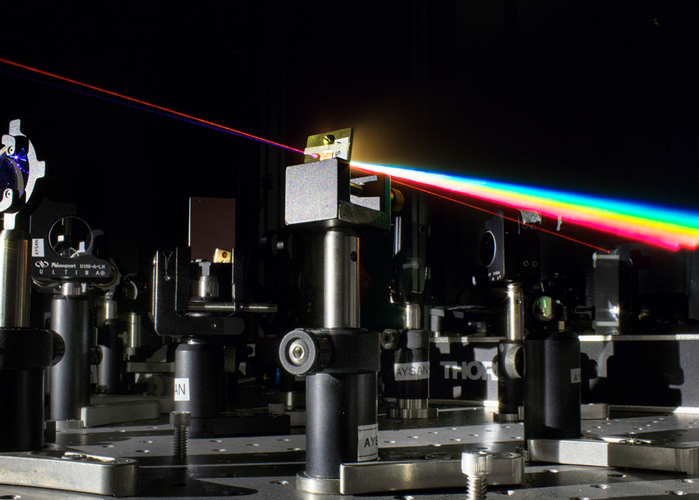
The approach uses infrared light to excite molecular vibrations, then converts those signals into visible light that can be recorded by a camera.
Because different molecules vibrate in distinct ways, the method can distinguish between chemical components inside a living sample.
Freezing motion at the speed of life
The breakthrough comes down to speed.
Instead of scanning across a sample, the system captures an entire image in a single shot. Each frame is recorded on the scale of a picosecond (about a trillionth of a second), minimizing motion blur.
“At that timescale, things don’t have time to move enough to blur the image,” Sokolov said. “So what you capture is very close to the system’s natural state.”
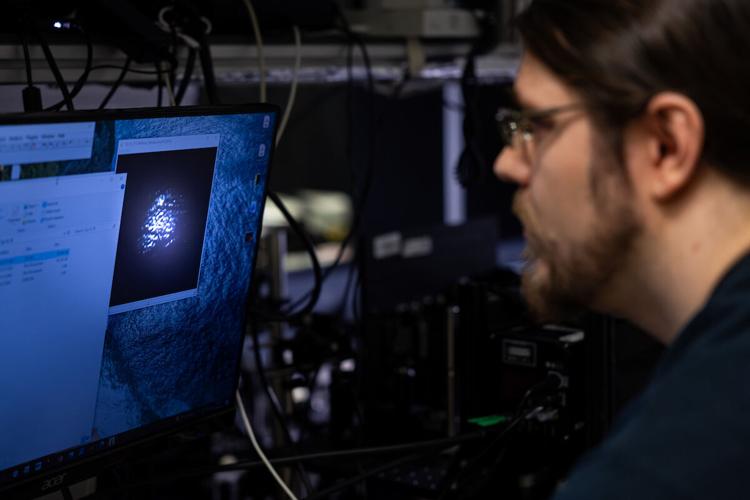
The team demonstrated the technique by imaging, among others, living C. elegans worms as they moved in water. The resulting “worm movies,” as Sokolov fondly calls them, show the organisms in motion while preserving chemical detail, without the distortion typically caused by motion blur.
At 1,000 frames per second, the system records these images in rapid succession, creating detailed, high-speed videos of biological activity.
A clearer view of how disease unfolds
The ability to observe chemical processes in real time gives researchers a more complete picture of how biological events develop moment by moment, rather than as a series of snapshots.
“Biological systems don’t operate in still frames,” Wang said. “They’re constantly changing. If you can watch that directly, you can start to understand how those changes are connected.”
That kind of visibility could help researchers better track how diseases emerge and evolve, particularly in systems where timing and chemical interactions are critical.
Over time, tools like this could also support efforts to detect subtle changes in cells earlier or monitor how they respond to therapies — areas where capturing real-time chemical activity has been a longstanding challenge.
A platform for fast-changing systems
Because the technique works in water-rich systems, it can be used to study living organisms in their natural environment, an important requirement for biological and biomedical research.
But its usefulness extends beyond biology. The same approach can be applied to systems where chemistry changes rapidly, including processes in physics and materials science.
“This is really about accessing a different timescale,” Sokolov said. “Once you can do that, a lot of new questions become possible.”
The team is now working to expand the method’s capabilities, including improving how precisely it can distinguish between types of molecules and increasing its sensitivity.
For now, the advance offers a way to watch fast-moving chemistry and biology as they unfold. “We’ve been limited by what we can capture,” Sokolov said. “A lot of important processes happen on timescales we simply couldn’t access before. This changes what’s observable and gives us a way to study those dynamics directly, instead of inferring them.”


