


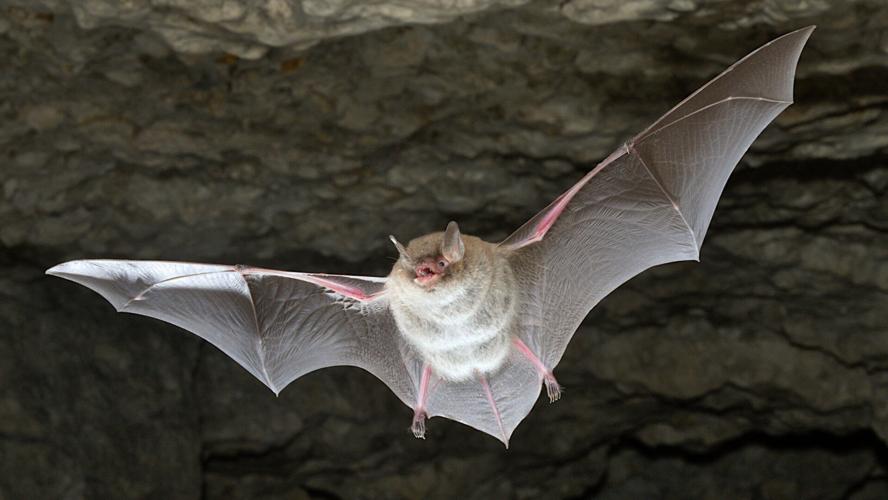
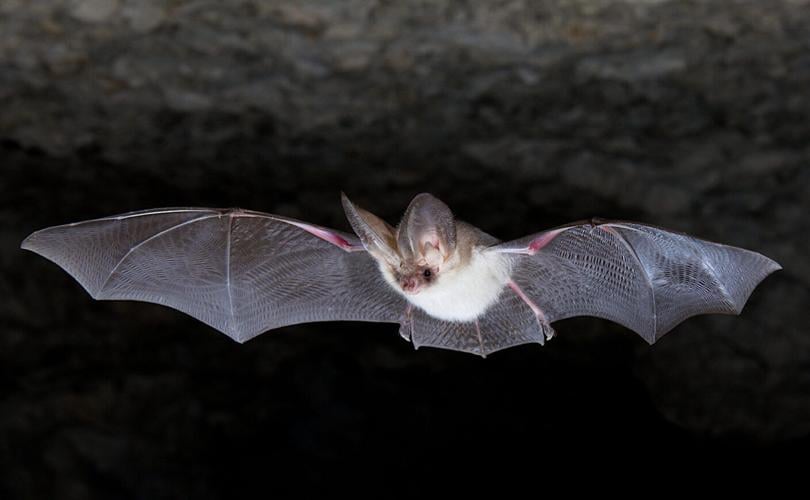
Bats have mastered feats that set them apart from nearly every other mammal, including powered flight, echolocation, exceptional longevity and tolerance to some viruses. Yet scientists have struggled for decades to determine how these animals are related and how their remarkable traits evolved.
Now, an international study is bringing that history into focus with help from a region of the X chromosome previously identified by researchers at the Texas A&M College of Veterinary Medicine & Biomedical Sciences (VMBS) as a genetic "time capsule."
The findings, featured on the cover of Nature, are part of the first phase of Bat1K, a global effort to generate high-quality genome sequences for every living bat species.
In their study, researchers analyzed chromosome-level genome assemblies from 103 living species representing all 21 recognized bat families and then combined the genomic information with the largest morphological data set of living and extinct bats assembled to date.
People are also reading…
Together, those resources allowed the team to build a new bat family tree, trace bats’ geographic origins, and create a framework scientists can use to investigate traits ranging from flight and echolocation to longevity and disease resistance.
"This paper, for all of the ground that it covers, is kind of the starting point," said Dr. Nicole Foley, an assistant professor in the VMBS’ Department of Veterinary Integrative Biosciences and member of the Texas A&M Center for Comparative Genomics. "It provides a broad picture of bat evolution — what their genomes and chromosomes look like, how they evolved, and when those changes occurred. Future studies can use that foundation to explore specific aspects of bat biology in greater detail."
Building a more complete bat family tree
Bats make up more than one-fifth of all living mammal species, but scientists have struggled for decades to determine how some bat families are related.
Earlier studies relied on a limited number of species, fragmented genome assemblies, or small portions of the genome. But rapid bursts of evolution, interbreeding between lineages, and a sparse fossil record complicated the picture.
To address those limitations, the Bat1K team combined high-quality genomes representing every bat family with anatomical information from living species and 44 fossils. The analysis resolved several disputed relationships, including the placement of Madagascar’s sucker-footed bats as the earliest branch of a major group that includes evening bats and free-tailed bats. Together, the findings produced a clearer picture of how the major groups of bats evolved.
Using the new family tree alongside fossil evidence, the researchers concluded that bats — and powered flight in bats — most likely originated in Europe during the late Paleocene, more than 56 million years ago.
The findings also suggest that bats developed laryngeal echolocation — using sounds produced in the throat to navigate and hunt — before modern bats began diversifying into the groups alive today.
Finding the reliable signal in a complicated genome
Even with a more complete collection of genomes, some parts of the bat family tree remained difficult to resolve because different regions of the genome supported different evolutionary histories.
This pattern, known as phylogenomic discordance, can develop when closely related species exchange DNA through hybridization or when species separate so rapidly that ancestral genetic variation is distributed unevenly among their descendants. As a result, evolutionary trees built from different sections of the genome can produce conflicting answers.
Foley and fellow VMBS researcher Dr. William Murphy, a distinguished professor and director of the Texas A&M Center for Comparative Genomics, contributed their expertise in recombination-aware phylogenomics to help the team interpret those conflicts.
Their work centered on the X-linked recombination desert, or XLRD, a large section of the X chromosome where genetic material is shuffled at an exceptionally low rate during reproduction. In a previous Nature study, Foley and Murphy found that the region has remained highly conserved across mammals for more than 100 million years, preserving deep evolutionary history even when genetic exchange obscures the signal across much of the rest of the genome.
"We believe this conservation stems from the XLRD’s enrichment for genes associated with reproductive traits and X chromosome structure that evolve in species-specific ways," Murphy said. "These differences can create barriers to genetic exchange across species boundaries by profoundly affecting viability and reproduction."
In the new bat study, most of the genome supported one version of how three major groups of bats are related, while the XLRD supported another. When researchers compared the two versions with a third family tree built using both genomic and fossil evidence, that tree agreed with the XLRD. This gave the team greater confidence that the XLRD had preserved the more accurate record of bats’ evolutionary history.
"This was a real-world use case for the XLRD," Foley said. "Our earlier work showed that this region can preserve evolutionary history when the rest of the genome gives conflicting answers. In this study, we used it to resolve one of the most difficult branches in the bat family tree — and it worked."
A foundation for the next generation of bat research
The new genomes and evolutionary framework will support research far beyond questions about the bat family tree. In addition to powered flight, bats have evolved an unusual collection of traits, including long lifespans relative to their body size, tolerance to some viruses, and the ability of certain species to thrive on extremely sugar-rich diets.
Foley is particularly interested in what bats could reveal about diabetes and viral tolerance.
"Comparing species that independently developed similar traits may help researchers identify the genes and biological pathways involved," she said.
The resource may also help scientists study microchromosomes, tiny chromosomes that are difficult to assemble with older sequencing methods. Previous research found that some bat microchromosomes contain genes associated with viral tolerance, raising new questions about whether their high rates of recombination help bats generate useful genetic variation.
"With Bat1K, I now have the building blocks I need to start pursuing those questions," Foley said. "This is going to be foundational not just for me, but for everybody who works on bats."
The consortium’s long-term goal is to generate reference-quality genomes for every living bat species. As that collection grows, researchers will be able to examine the origins of bats’ distinctive traits in greater detail and place mammalian evolution in a broader context beyond humans and domesticated animals.
Beyond its scientific value, Foley hopes the project will change how the public views bats.
"Bats sometimes get a bad reputation because people associate them with rabies," Foley said. "But they live incredibly long lives and have evolved solutions to many problems that also affect humans. I hope this study helps people recognize how remarkable they are and how much we can learn from them."


