

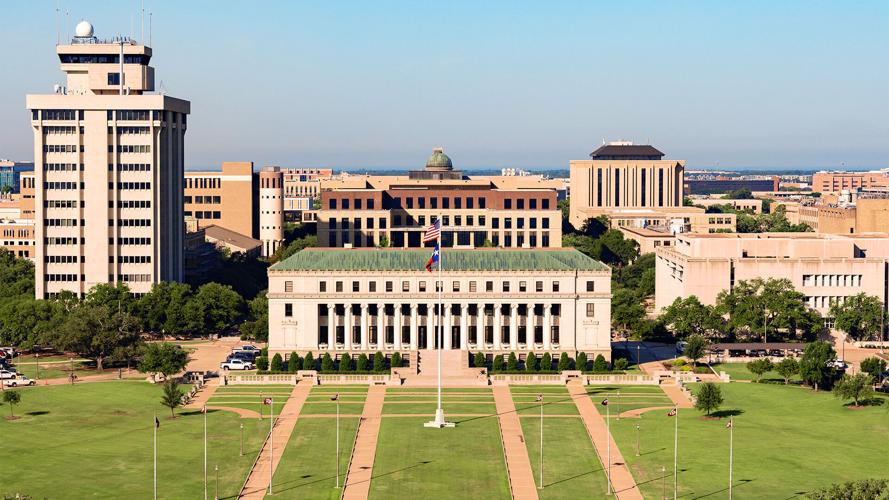
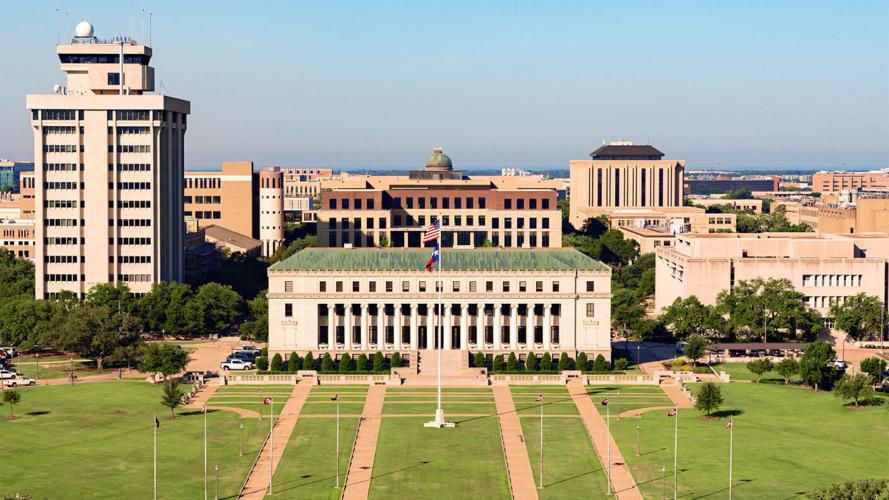
Texas A&M University ranks No. 24 overall among the nation’s public universities and No. 59 among all American universities in the U.S. News & World Report 2026-27 Best Colleges rankings.
Texas A&M earned especially strong results in education abroad, service education, first-year student experience, engineering and business. The undergraduate petroleum engineering program remains the nation’s highest-ranked.
U.S. News also ranked Texas A&M No. 24 in the publication’s Best Value Schools category, reflecting the university’s combination of academic quality and affordability.
“These results reflect the breadth of a Texas A&M University education: rigorous academic programs, meaningful opportunities to learn and serve beyond the classroom, and a student experience designed to help Aggies thrive from their first year through graduation,” said Dr. Jerry R. Strawser, interim provost and executive vice president. “We are especially proud to see national recognition for areas that are central to who we are, including service, global learning, and the value we provide students and families.”
People are also reading…
Leading opportunities to learn around the world
U.S. News ranks Texas A&M first in Texas and No. 3 nationally among public universities for study abroad, known at the university as Education Abroad.
Texas A&M offers educational programs across all seven continents and maintains partnerships with institutions around the world. These experiences allow Aggies to expand their academic knowledge, develop cross-cultural understanding and prepare to contribute in an increasingly interconnected world.
Texas A&M students have pursued educational experiences in locations ranging from established international academic centers to Antarctica.
Learning to serve
Another category in the U.S. News rankings, service learning, highlights schools that integrate community volunteering directly into the academic curriculum as a required part of students’ coursework. Texas A&M ranks first in this category among Texas public schools and No. 5 among all U.S. public universities.
The American Association of Colleges and Universities has designated this method of teaching as a high-impact practice. Research has demonstrated that by linking coursework to real-world community needs, as Texas A&M does through its Center for Teaching Excellence, a university significantly boosts student graduation rates, social responsibility and long-term career development.
A nationally recognized first-year experience
Texas A&M also ranks first among Texas public universities in the first-year student experience category for the second consecutive year and No. 8 nationally among public institutions.
Programs such as Fish Camp and Hullabaloo U help incoming students make the transition to college life, connect with the Aggie community and gain access to academic and personal support.
Fish Camp is a three-day, two-night orientation program that introduces new students to Texas A&M’s traditions, resources and community. Hullabaloo U is a first-year seminar taught by faculty and staff that connects students with peer mentors and university resources intended to support their academic and personal success.
Bridging disciplines to solve worldwide challenges
U.S. News also ranked Texas A&M highly in the biological and agricultural engineering category.
The university’s Department of Biological and Agricultural Engineering finished fifth among all schools. Jointly administered by the College of Agriculture and Life Sciences and the College of Engineering, it functions as an academic and research hub focused on engineering solutions for food, water, energy and environmental systems. It bridges the gap between engineering principles and life sciences to address global challenges in agriculture and natural resources.
Nationally ranked academic programs
Among the other categories in which Texas A&M earned recognition from U.S. News among all American universities are:
The Best Colleges rankings evaluate universities using measures that include graduation and retention, graduation-rate performance, social mobility, graduate debt and earnings, peer assessment, faculty and financial resources, standardized test performance and research citations.