


NASCAR races are a high-octane spectacle — fast, loud and electrifying. But for 10 Texas A&M University students, it’s not just about the adrenaline rush.
It’s also about mastering peak automotive performance at speeds of up to 200 miles per hour. And it’s about pushing drivers to their limits while keeping them as safe as possible on the track.
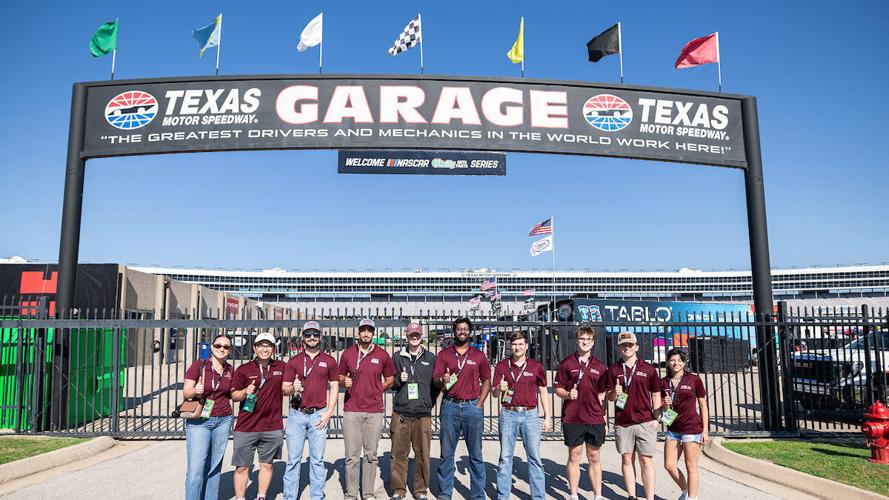
On Saturday, May 2, 10 students with Texas A&M’s Society of Automotive Engineers (SAE) got to experience firsthand what goes on behind the scenes at a NASCAR race at Texas Motor Speedway in Fort Worth, Texas. The day was especially exciting for these Aggies who design, build, test and race their own vehicles in SAE competitions.
Texas A&M’s SAE competes in races in Formula IC (internal combustion), Formula EV (electric) and Baja (off-road). The Aggies attending were Kevin Shafik and Tyler Anderson (Formula IC); Thomas Wirgau, Sofia Esterellas and Braydon Tougas (Formula EV); Iain Gary and Rohan Kataram (Baja); and Marcela Gonzalez (marketing). Also part of the SAE contingent were Reese Montcalm and Jeremy Macias.
People are also reading…
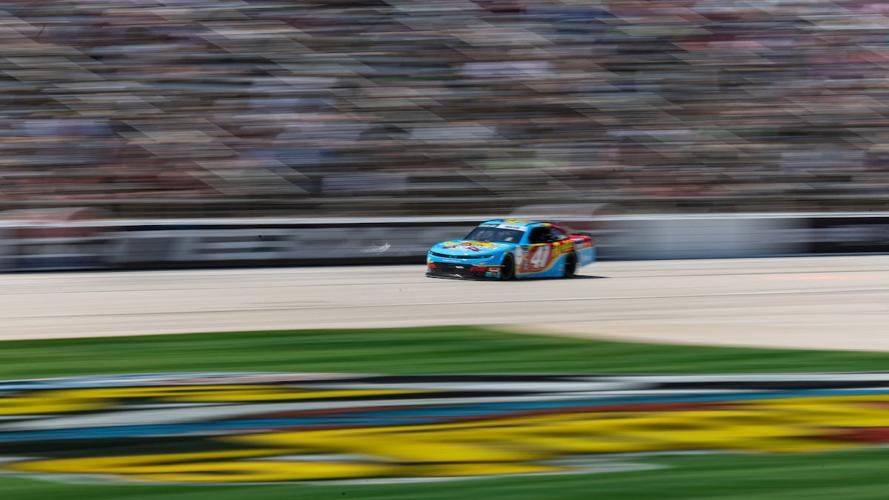
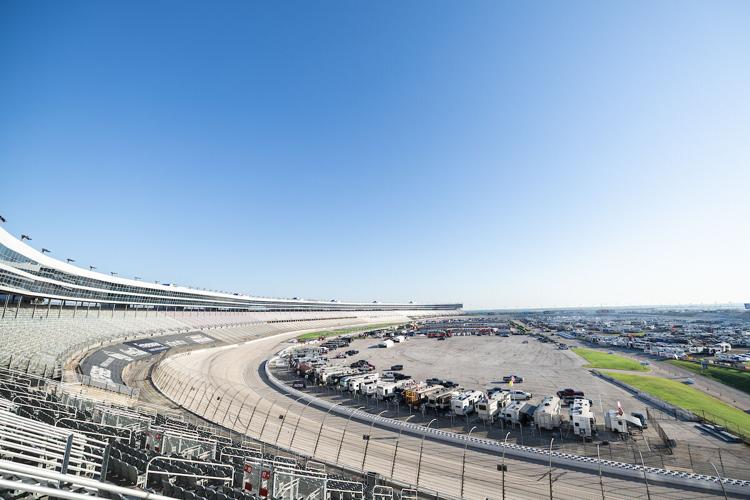
The SAE group was in Fort Worth for VIP access to the Andy’s Frozen Custard 340, a NASCAR O’Reilly Auto Parts Series race at Texas Motor Speedway. The 300-mile race was contested over 200 laps on the 1.5-mile-long asphalt oval.
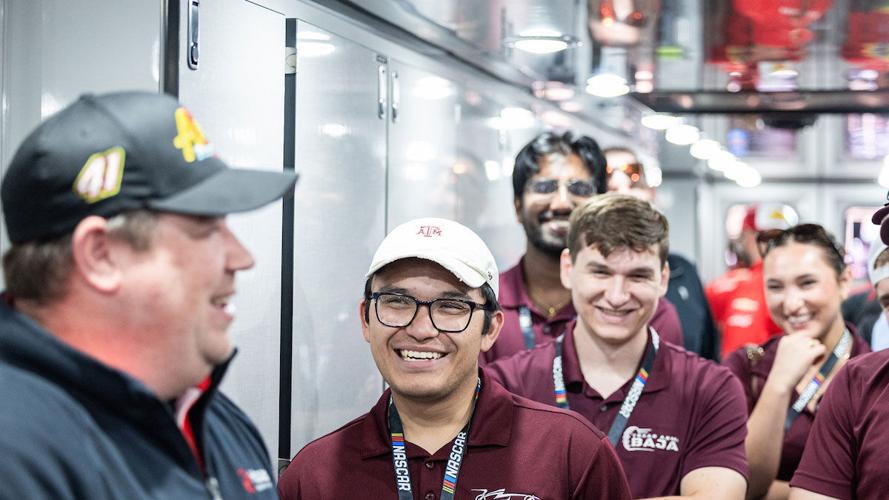
The students were guests of the Haas Factory Team. As part of the day’s experience, the SAE students received a tour of the NASCAR Cup Series garage, where they met with team personnel. The Haas Factory Team had two entries in the Andy’s Frozen Custard 340: the No. 41 Chevrolet, driven by Sam Mayer, which finished in third place, and the No. 00 Chevrolet, driven by Sheldon Creed, which finished in sixth place.
The 2026 Andy’s Frozen Custard 340 was won by NASCAR driver Kyle Larson.
The students were privileged to watch the race from the team’s pit stall on pit road, allowing them to see firsthand how real-time data and pit stop precision drive performance on the track. In addition, they were able to talk with pit crew members throughout the event and receive real-time feedback after each pit stop.
They were thrilled with the opportunity not only to sit immediately next to the action, within inches of the racing surface, but also to learn about the dynamics that ensure team and driver work together seamlessly. Timing is critical, and every component of the car — from the motor to the wheels — has to be in perfect alignment to ensure success.
As part of the day, the group also toured the No. 41 car’s hauler and had a meet and greet with NASCAR Cup Series driver Cole Custer. Custer is the driver of Haas Factory Team’s Texas A&M-sponsored car and drove in the Sunday, May 3, race at Texas Motor Speedway, the NASCAR Cup Series Würth 400.
Saturday, May 2, was quite an eye-opening experience for the SAE group.
Baja team member Iain Gary, a junior mechanical engineering major, said he went into the day hoping to see what a career in race engineering would look like — to witness the work that goes into the car before and after the race. He wasn’t disappointed.
“The most exciting experience was our discussion with the lead race engineer. His knowledge on the little details of the car and track was very interesting. I learned how the unique layout and features of the tracks heavily influence the setup of the car.
“The members of a NASCAR team are always moving. They have an extreme level of focus and dedication to keep up in the environment. These are attributes that I aim to exemplify to be a dependable engineer in any situation,” he said.
Gary’s Baja teammate Rohan Kataram, a junior mechanical engineering major, said that, coming from a student-led race team, he wanted to see if there was a different level of care taken by the professionals for their team.
“As the day progressed, I could definitely see the amount of focus put into every task, from the race spotters to just people keeping the pit clean. The level of dedication is definitely what I am taking with me as I leave this weekend. Talking to some of the race engineers on a personal level really let me see how much they have given to do what they love. Being on the road 40 weeks of the year and devoting your all every single weekend is something that I can’t imagine.
“I would have to say the most exciting part of this weekend was hopping on the driver channel and hearing the conversation between the spotter and driver. The ability to take into account everything going on, on the track, with nearly 40 cars is insane. It also takes a lot to see everything and convey only what’s necessary to the driver,” Kataram said.
Marcela Gonzalez, a graduate student working on her master’s degree in marketing, had a bit of a different perspective on the day. Gonzalez — who grew up in a motorsports fan household and was voted by her fourth-grade class as “Most Likely To Become a NASCAR Driver” — said she discovered that there’s more to motorsports marketing opportunities than just social media; there are also background roles that “make things move,” such as roles in partnerships and equipment sales, which require sales experience and personability.
“I’ve always been fascinated by motorsports, especially the strong brand presence and the sheer number of teams and companies involved in making each event happen. Seeing that level of collaboration has motivated me to pursue creating strategic, mutually beneficial partnerships, no matter what company or industry I work in throughout my career,” she said.
Gonzalez was also impressed by the intense behind-the-scenes work on a NASCAR team.
“The most exciting part of the experience was seeing how the race engineers ran simulations in real time. I knew that it took a lot of data interpretation, but it’s something you can’t conceptualize until you are actually there watching all of the screens and all of the numbers,” she said.
The day with the Haas Factory Team showed these Texas A&M students how things they learn in the classroom can be applied to the real world. It reinforced what they’ve been experiencing by competing on SAE race teams: how working together as a group and pooling expertise can make a significant and meaningful impact on the track and how pushing yourself, making adjustments and working to improve produces winners.


