


President George H.W. Bush, namesake of The Texas A&M University System’s George H.W. Bush Combat Development Complex (BCDC), was honored June 21 through the No. 41 Haas Factory Racing Chevrolet during the Anduril 250 Race the Base NASCAR Cup Series race at Naval Base Coronado.
The specially designed No. 41 car celebrated Bush’s life and legacy while highlighting qualities that defined both the 41st president and the university he chose to carry on his enduring impact: character, courage, leadership and selfless service. The race brought national attention to Bush’s service as a U.S. Navy aviator, his connection to Texas A&M University and the values that continue to shape the Brazos Valley and beyond.
Those values are visible every day at BCDC, where researchers, engineers and partners work to accelerate national security innovation and deliver advanced technology to those who serve.
People are also reading…
“We are honored to have the opportunity to carry the name of President George H.W. Bush as part of the innovative work that is happening here on Texas A&M-RELLIS,” said U.S. Air Force Maj. Gen. (Ret.) Tim Green, BCDC director. “When members of the president’s family and cabinet visit, we often get two questions: Is the work you are doing important to the nation? Are you working with others with the dignity and respect that embody President Bush’s example? Our answer is yes. … The president’s commitment to service and living a life of values serves as a guiding light for our team.”
When members of the president’s family and cabinet visit, we often get two questions: Is the work you are doing important to the nation? Are you working with others with the dignity and respect that embody President Bush’s example? Our answer is yes.
Maj. Gen. (Ret.) Tim Green
Director
Bush Combat Development Complex
A mission of service and national security
BCDC operates with a clear mission: to move swiftly, deliberately and precisely in support of national defense. Beyond this core mission, BCDC is equally committed to keeping Texans at the forefront of U.S. innovation — supporting students, Texan-owned businesses, job creation and ongoing innovation.
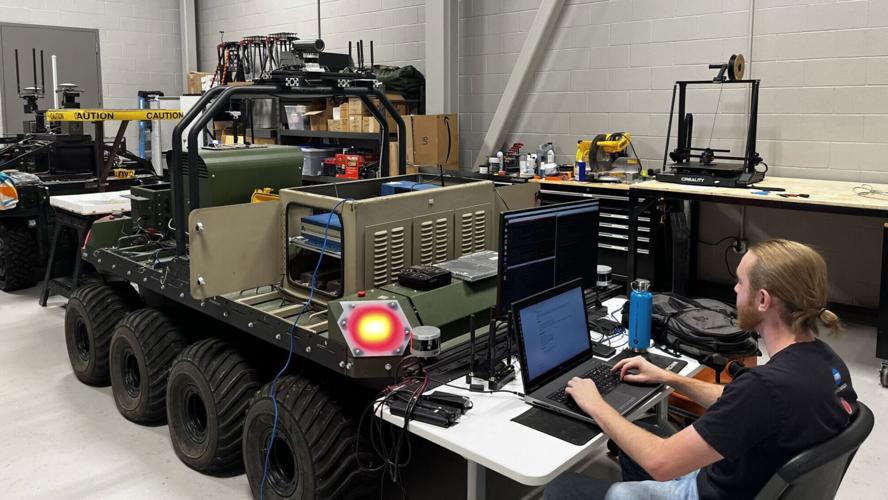
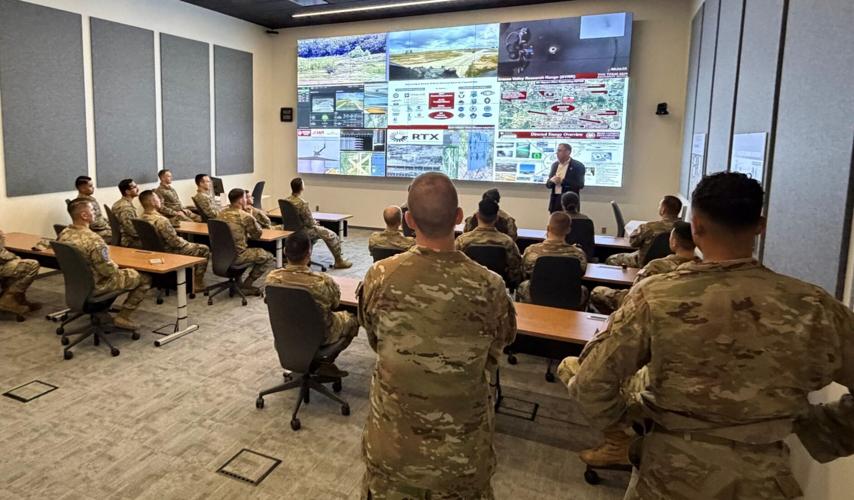
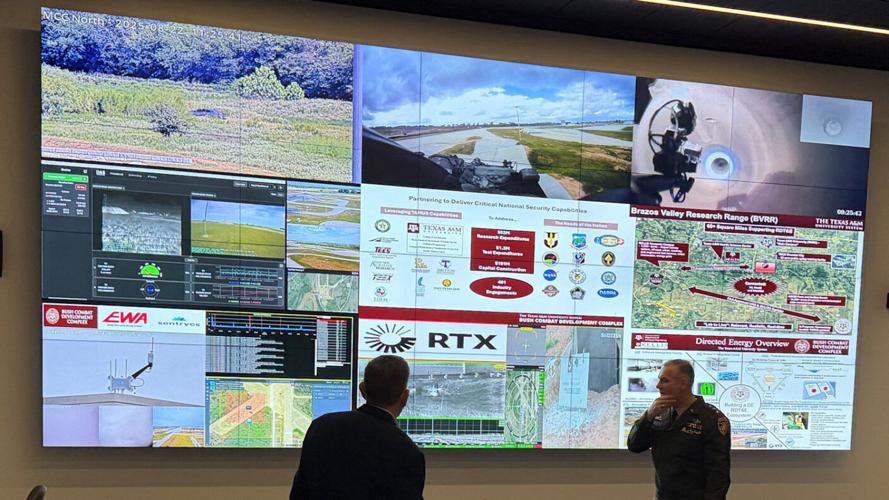
Located on the Texas A&M-RELLIS campus in Bryan, Texas, BCDC is designed to support the full life cycle of defense innovation — from research and development to testing and field deployment. Its infrastructure includes outdoor ranges, the Innovation Proving Grounds and advanced laboratories that enable collaboration among academic researchers, small businesses, defense partners, industry leaders and government agencies.
A core pillar of BCDC’s mission is its commitment to Texas — not just advancing military technology but also supporting local industries and promoting workforce development through education and training. Green emphasized that this progress is not accidental — it is earned through sustained collaboration across many Texas A&M System entities, including the Texas A&M Engineering Experiment Station, and through shared purpose and relentless effort.
“This work doesn’t happen by chance — it’s a grind,” he said. “Some believe our technological edge is a birthright. It’s not. It’s earned. It takes brilliant minds to innovate, dedicated public servants to prioritize the mission and a strong team to support and empower those doing the work.”
According to Green, this shared commitment is what defines the BCDC community and fuels its ongoing impact. “We have all of that right here at Texas A&M and across our home state. … That’s what makes me so proud to be part of this mission,” he said.
“BCDC remains important for its technological advancements, as its leadership continues to seek ways to keep warfighters safe against potential adversaries,” said Dr. Nathan Tichenor, BCDC chief research officer and a research associate professor in Texas A&M’s Department of Aerospace Engineering.
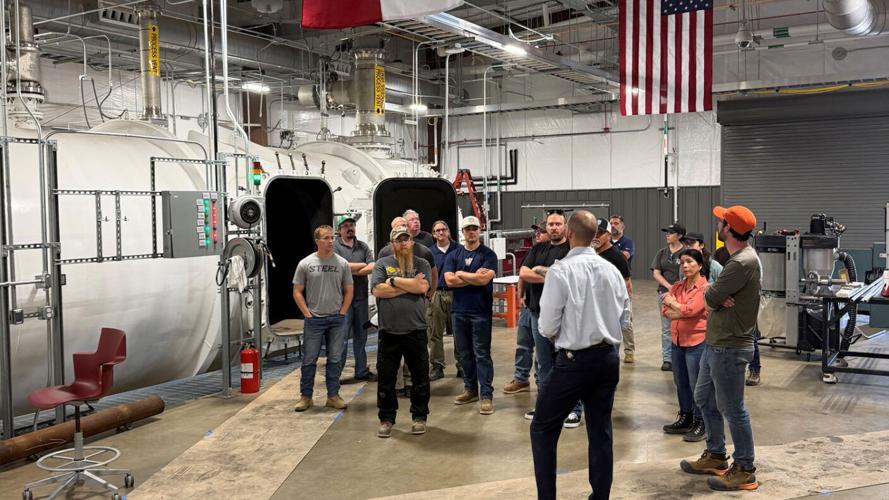
Among those advancements, just over a year ago, BCDC formally opened the Ballistic, Aero-Optics, and Materials (BAM) Range, a giant high-tech tool in the race for the world’s best weapons systems.
“The BAM is the nation’s largest and most advanced enclosed testing range for innovation in laser and hypersonic systems, including new materials that can withstand hypervelocity impacts,” said Tichenor.
Moving innovation to the forefront of national security
The BAM was built to close a critical gap in the U.S. research and development infrastructure between laboratory facilities and open-air testing ranges on military bases. BAM’s large scale — 8 feet in diameter and a half kilometer long — allows for more realistic environments that are critical to understanding the toughest physics and proving out cutting-edge technologies. Unlike open-range testing, the BAM is enclosed, allowing researchers to leverage advanced diagnostic tools to measure aero-optic propagation, weather effects and aerothermodynamic performance in a controlled and characterized environment. And with the execution of the more than $70 million Phase II — which The Texas A&M University System Board of Regents just approved in May — the BAM capabilities will be extended to a full kilometer over the next two years.
BCDC also shows leadership through its willingness to tackle other challenging projects for the good of the state and nation. For example, last year, the Texas Legislature appropriated $59.8 million for BCDC to develop and evaluate the use of autonomous aviation to combat wildfires — using a pilotless Blackhawk helicopter. The project is intended to revolutionize how Texas responds to the wildfires that ravage the state every year.
The Legislature directed BCDC to partner with the Defense Advanced Research Projects Agency (DARPA) on the agency’s Aircrew Labor In-cockpit Automation System (ALIAS). The state funding for ALIAS Texas supports the acquisition and autonomous configuration of UH-60 Blackhawk helicopters, as well as the development of facilities, tools and equipment necessary for research, testing and integration of critical firefighting capabilities on the ground and in the air. The program will produce tools for firefighters and first responders to improve their effectiveness and safety, while reducing the economic impact of the fires.
“ALIAS Texas has brought together organizations and resources from across the nation to solve this important need, just as President Bush built political coalitions to tackle his most difficult challenges,” said John “J.D.” Diem, principal investigator for ALIAS Texas and director of BCDC’s Innovation Proving Grounds.
“The real key to the success of BCDC is its people,” said Tichenor. Starting out with eight people in 2018 and expanding to more than 120 — including more than 20 faculty members — BCDC continues to focus on delivering critical technologies to those who wear the uniform when they need it. One area that makes BCDC different from traditional university departments is its use of full-time research engineers.
“BCDC’s mission is to accelerate critical technologies. We have deliverables to meet — commitments to our strategic partners. We must move much faster than traditional academic cycles to make a decisive impact for the nation, so we do that through the employment of research engineers and even how we execute our projects for speed,” said Tichenor. “We could not do what we do without our excellent team; we’re honored that each of them chooses to serve the nation outside of wearing a uniform.”
Today, BCDC’s focus remains clear: advance technologies that protect the lives of warfighters, strengthen the defense capabilities of the United States and ensure Texas remains at the forefront of national security and innovation.
In doing so, the complex continues the legacy of character, courage, leadership and selfless service that defined President Bush and remains central to Texas A&M’s service to Texas, the nation and beyond.


